
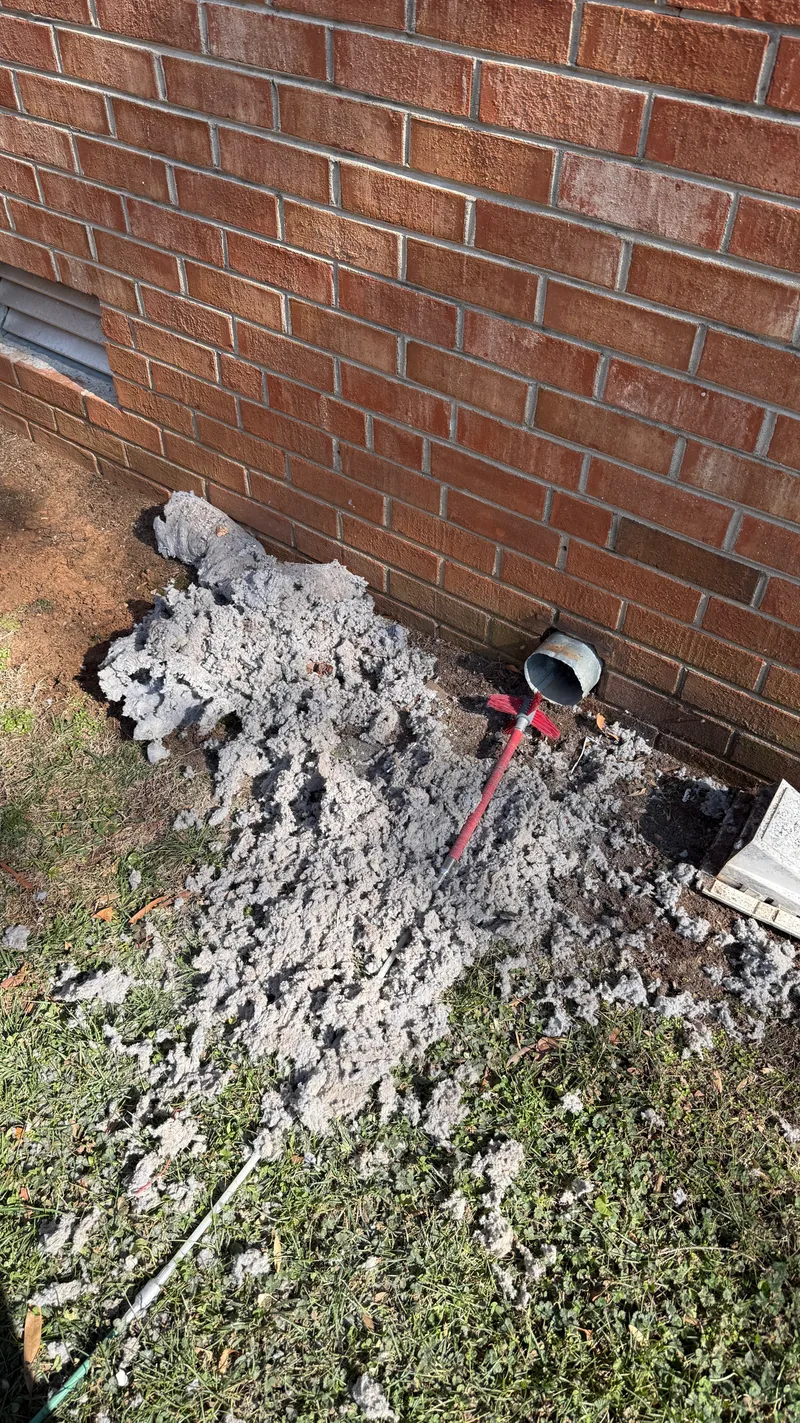
We recently serviced a dryer vent in Green Valley—a quiet Greensboro neighborhood east of Guilford College—and walked into what we call a triple threat. Three separate problems, each bad on its own, stacked together into a setup that was begging for trouble. By the time we finished, we’d pulled out more lint than we’d seen in months.
Here’s what we found and what we did about it.
Threat #1: The Tangled Transition Hose
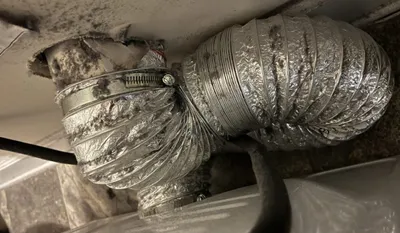
The dryer was hooked up with a long, accordion-style flexible hose crammed into the gap behind the machine. It was bent into tight coils and kinks—barely any air was making it outside. We knew we were in for the motherlode before we even started.
When a transition hose is too long or poorly routed, airflow slows down. Lint sticks to the ridges inside the hose and in the vent pipe beyond it. Over time it compacts into dense clumps. That restriction also forces your dryer to run longer and hotter, which is exactly how dryer fires get their start. This poor installation was a ticking time bomb.
We removed the old hose and installed a properly sized flex connection with a straight run and no kinks. The difference in airflow was immediate.
The Lint We Pulled Out
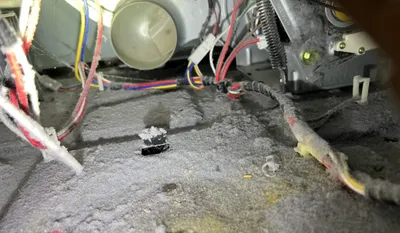
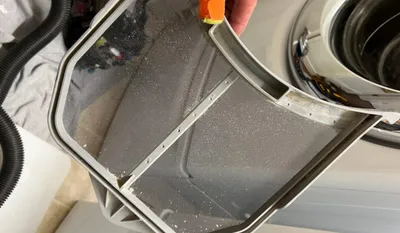
We couldn’t believe how much was packed in there. Piles and piles of dense, compacted lint—years of buildup trapped by the restricted flow. We cleared everything from the transition hose through to the exterior vent. Here’s what came out.
Threat #2: The Floor Connection Cut Too Short
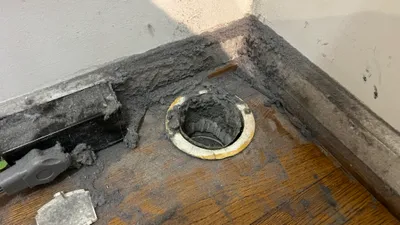
The rigid vent pipe coming up from the floor was cut flush—or below—the finished floor. That made it impossible to get an airtight seal with the transition hose. Dust and lint were leaking out around the connection and settling behind the dryer and along the baseboard.
We modified the floor connection so the pipe extended above the floor enough to accept the hose and clamp securely. No more leaks. That airtight connection will hold up for years without dust blowing behind the machine.
Threat #3: The Vent Cover Blowing Into Dirt
Common in older Greensboro neighborhoods, the vent pipe exited low on the wall—close to the ground. The homeowner had a down-blow cover: the kind that directs exhaust straight down. In this case, that meant the dryer was blowing directly into the soil.
That creates serious back pressure. Moisture, dirt, and debris can work their way back in. The dryer has to fight harder to push air out, which shortens its life and keeps lint accumulating. We replaced it with a 3-louver cover that blows air straight out instead of down into the dirt. Airflow improved and the risk of restriction dropped.
Don’t Let It Become a Triple Threat
If your dryer takes forever to dry, your laundry room feels humid, or you’ve never had professional dryer vent cleaning in the Triad, it’s worth a look. A bad transition hose, a leaky floor connection, or a vent cover in the wrong place can compound quickly—exactly like this Green Valley job.
Schedule a visit and we’ll inspect the whole system, clean it thoroughly, and fix any issues we find. One call can turn a ticking time bomb into a safe, efficient setup.