
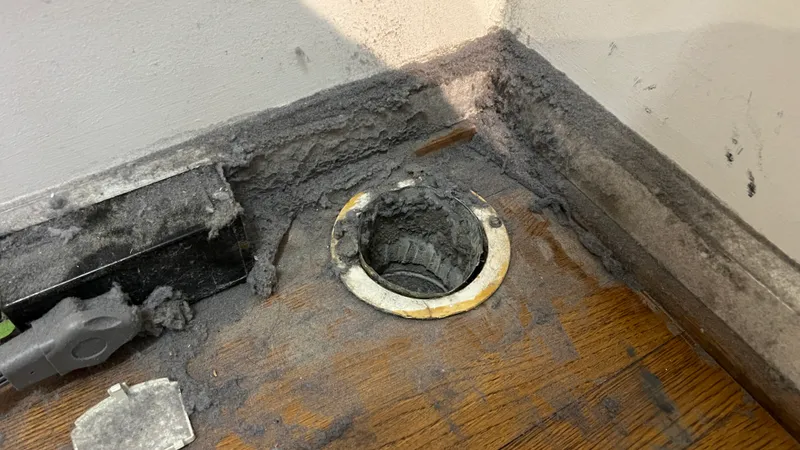
One of the most common questions we get on service calls is some version of this: why is there so much dust on my baseboards, washer, dryer, walls, and floor? Why does my whole house feel dusty?
A lot of that dust is coming from the dryer. Not every speck in a home, but more than people expect.
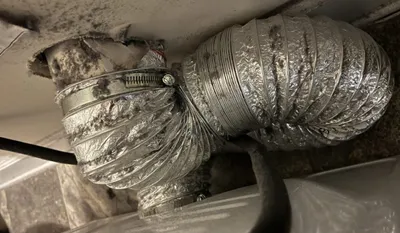
When the vent system is restricted with lint, the dryer has to push harder. That creates back pressure. Air and fine lint look for the path of least resistance. If the transition hose is crushed, taped wrong, or pulled loose at the wall or the dryer, lint sneaks out at those gaps and settles behind the machine and along the trim. We see it constantly on jobs around Greensboro, Winston-Salem, Burlington, and the surrounding Triad area.
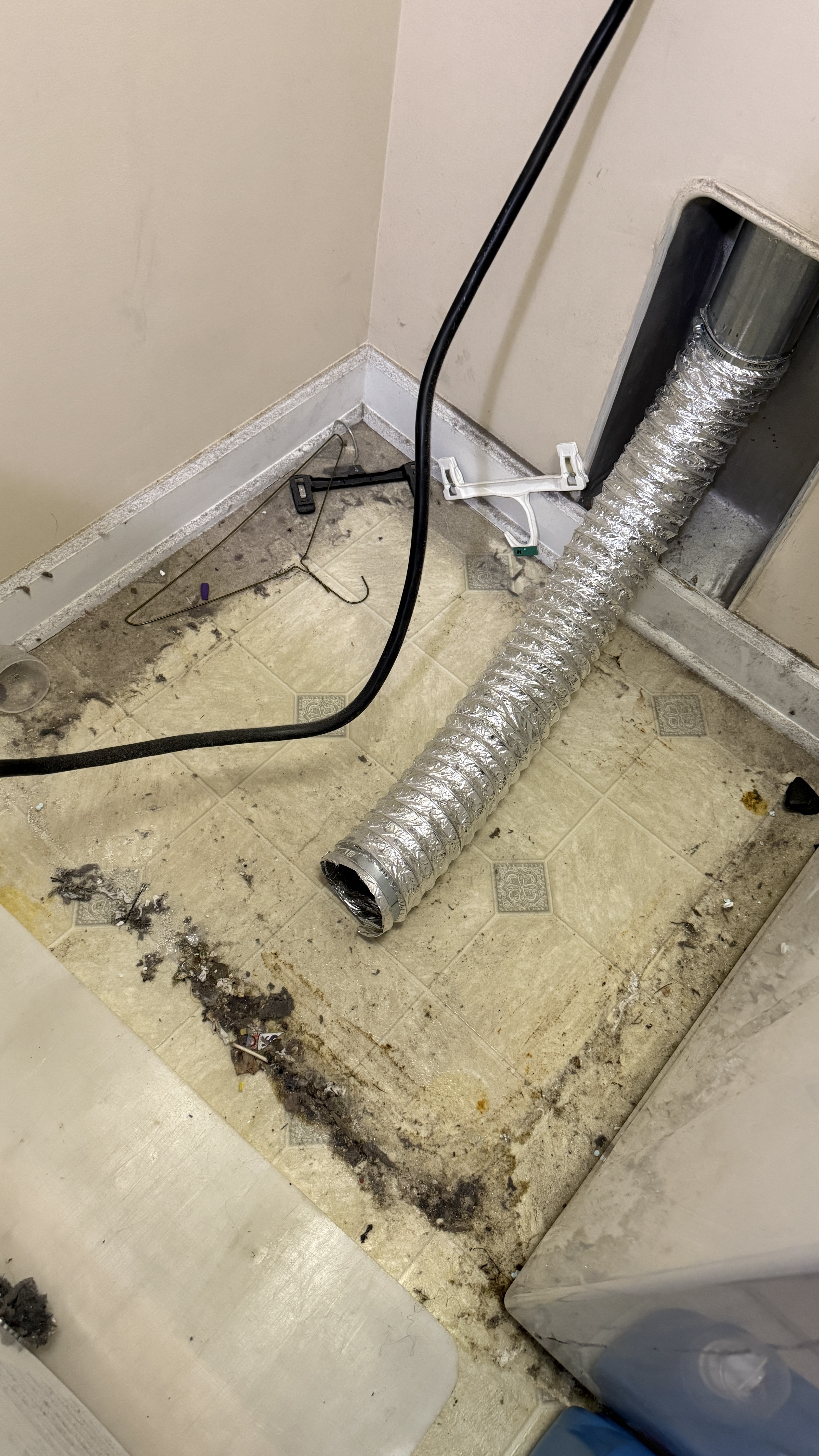
Every time you run the dryer, you’re also putting fine lint particles into the laundry room air. When the central AC or heat kicks on, the house pulls air around. Dusty air from the laundry area doesn’t stay in one corner. That’s when people start connecting dots: the upstairs hall is always dusty, or the kitchen counters pick up linty dust when the laundry is off the kitchen. That’s usually where the lightbulb goes off.
Leaky connections and bad flex
Crushed flex, bad routing, and gaps at the clamp are some of the worst offenders. When the duct is clogged, more air tries to escape through those weak spots.
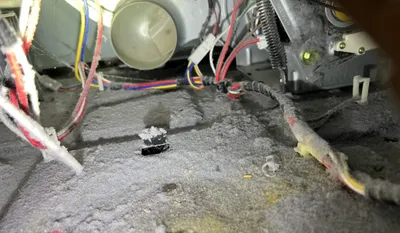
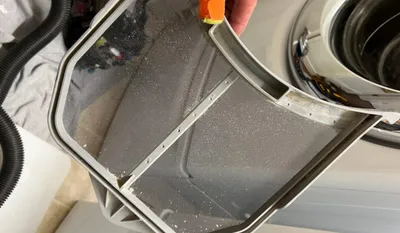
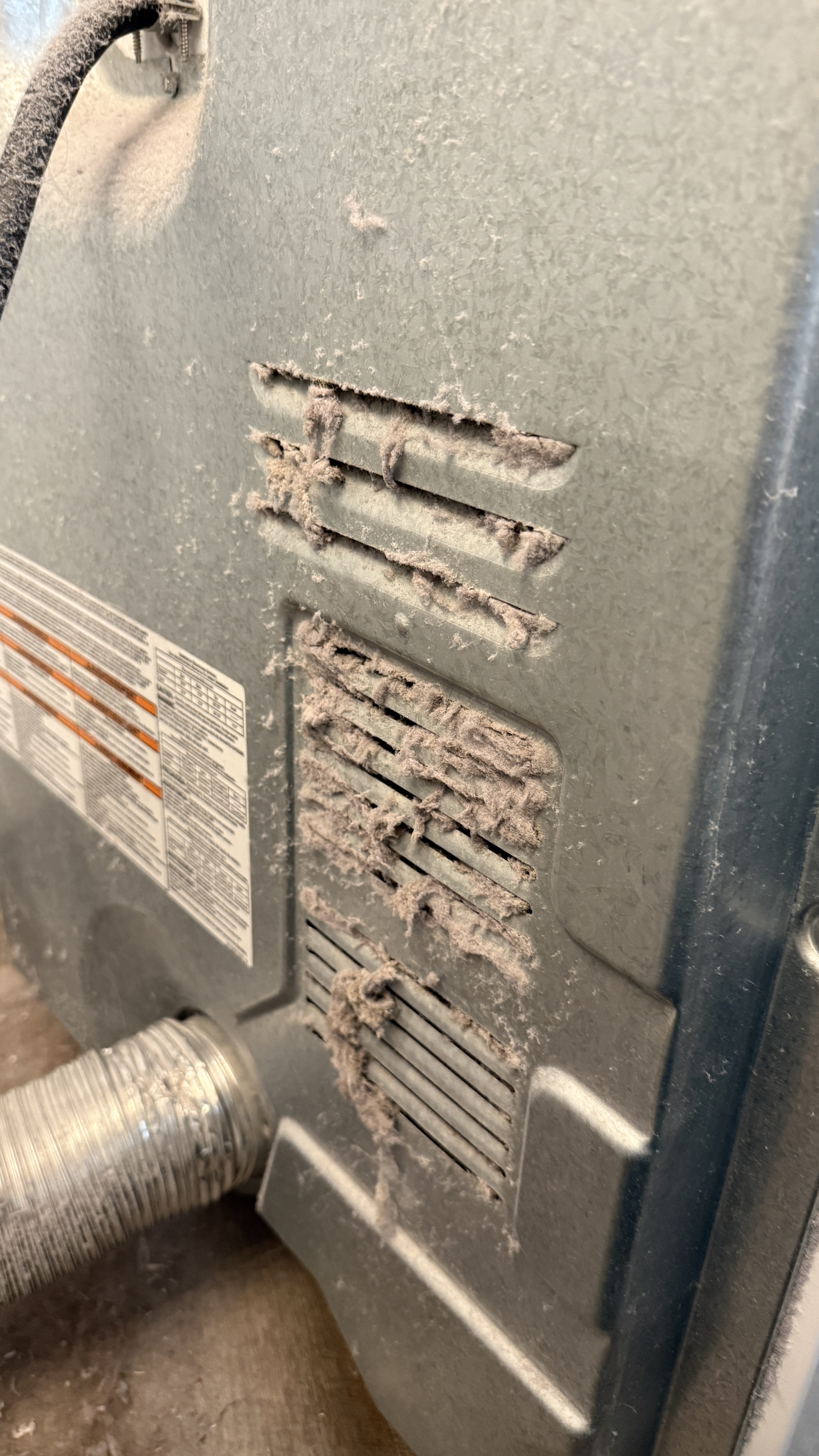
The dryer also isn’t a sealed box the way people picture it. Most lint traps are sealed with foam or weather stripping around the housing. As the machine ages, that seal wears out. More lint and dust get drawn into the cabinet, onto the heater, and around the electronics. The dryer pulls makeup air through the back, too. When the vent is fighting back pressure, lint gets everywhere—including caked on the intake louvers. In our experience we see a lot of dust buildup inside and on the back of machines that have been running for years—Speed Queen, Whirlpool, LG, Samsung, and others. It’s not about bashing a brand. It’s wear we see in the field.
There’s another spot that worries us: the 240-volt outlet, cord, and plug. Lint is fluffy and it holds moisture. When it packs around the receptacle or terminals, that’s not a small housekeeping issue. If you see fuzz collecting there, it’s worth getting the source fixed, not just wiping the plate.
Restricted exhaust can push lint where it doesn’t belong—including around wiring and components.
Quick tip: baseboards
Here’s a simple trick customers like. Take a dryer sheet and run it along your baseboard molding. It leaves a thin waxy film on the trim. Next time you dust, a Swiffer or dry duster slides along and the dust lifts off easier. You don’t have to crawl around with a wet rag on every groove. If you’re sensitive to scent, try an unscented sheet or a dry microfiber cloth with a light touch of your usual dusting product. Same idea.
How we fix it
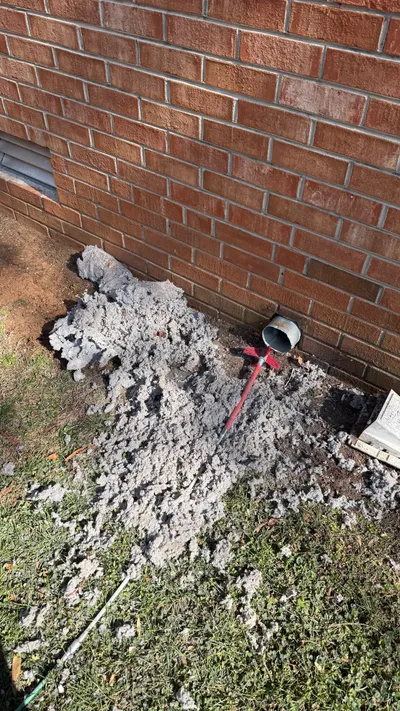
The first step is a real dryer vent cleaning: clear the restriction from the machine all the way to the outside, including the vent cap. Then we address what caused the dust in the first place.
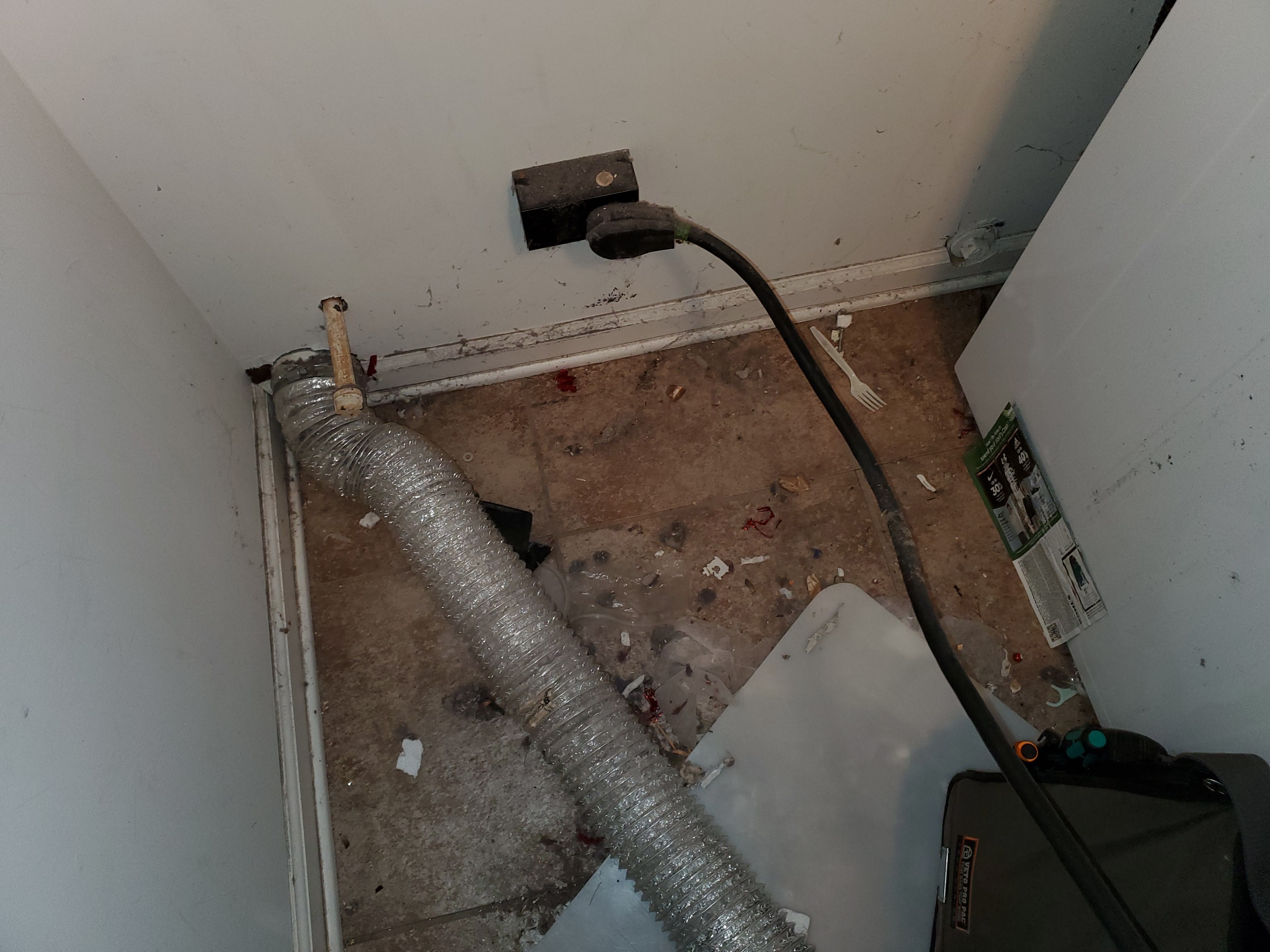
On our visits we include a new transition hose and proper clamps where needed, and we fix connection problems we find behind the dryer. A large share of the homes we visit have some dust issue back there once we pull the machine out. Often it’s a bad hose, a short pipe at the floor, or a gap that never sealed right.
We also clean inside the dryer: the lint trap housing and the blower housing. That’s part of our full-service cleaning, not an add-on. Most fires and a lot of the mess start at the dryer and the flex hose, not only inside the wall duct. If we only brushed the duct from the outside and never touched the back of the dryer, we’d leave the problem half fixed.
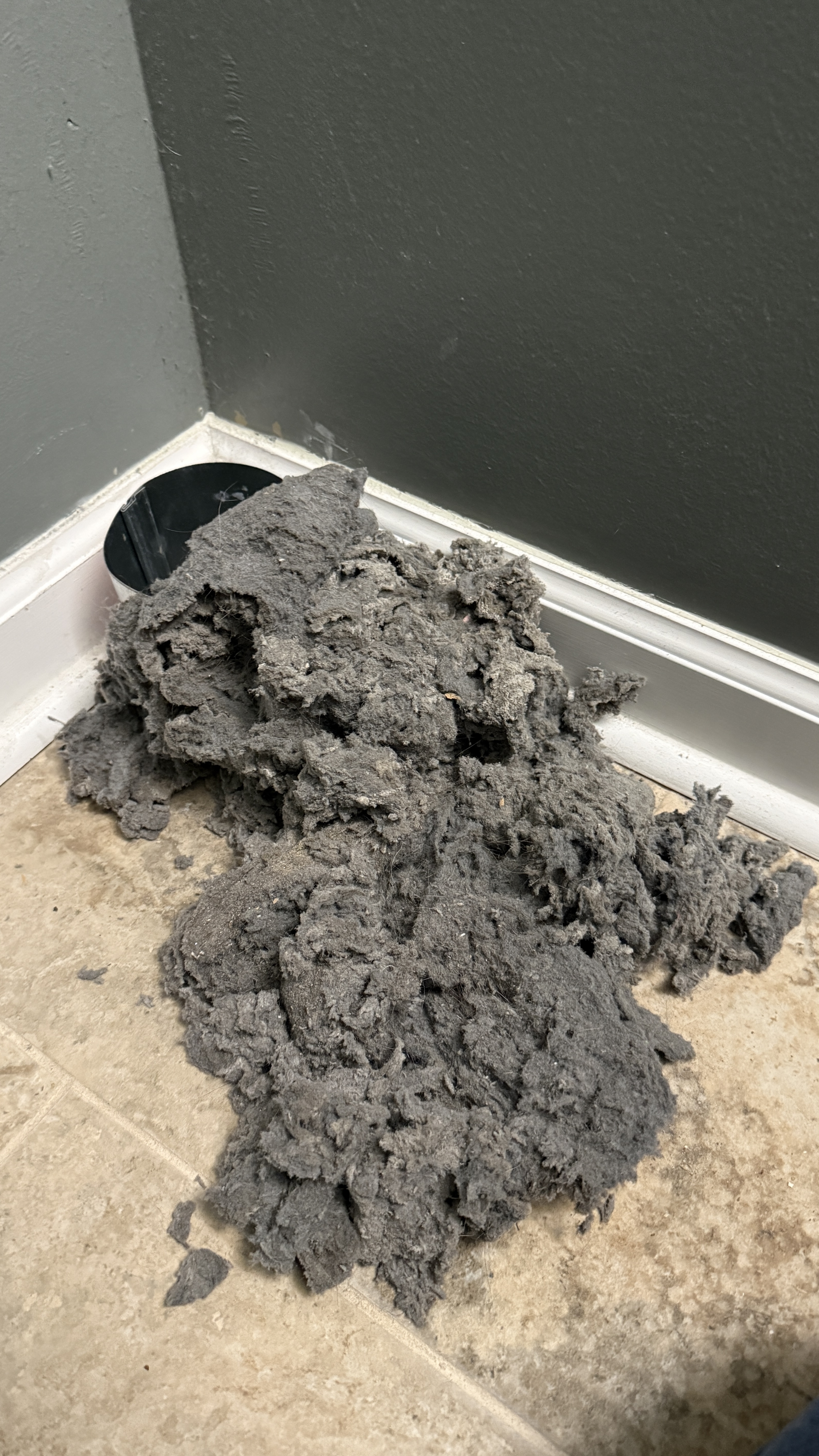
That’s the difference between what we do and a blow-and-go or a company that doesn’t work on appliances. We’re not upselling a hose you actually need. We’re not shoving the dryer back against a crushed flex and calling it done. One flat price covers what the job actually requires for a safe, efficient setup: hose, tape, clamps, minor fixes, roof or second-story access when that’s part of your run, and the work inside the machine. We’ve spelled out how that compares to cheap quotes in our post on how much dryer vent cleaning costs and why a bad transition still causes dust and risk even after a “clean” vent.
If you’ve never seen what a leaky connection looks like in a real laundry room, read the story behind our triple-threat dryer vent job—dust on the baseboard, bad floor stub, and a vent path fighting itself all at once.
When the job is done right, the transition is metal flex (we use DryerFlex), foil tape and clamps at the joints, and no gaps for lint to blow into the room. The floor behind the dryer should look like this—not a grey coating of fuzz.
If your laundry room is coated in dust and you’re in Greensboro, Winston-Salem, Burlington, or nearby, we’re happy to pull the dryer, show you what we find, and fix it the right way.
Schedule a visit and we’ll inspect the whole system, clean it thoroughly, and fix what we find.
Triad dryer vent cleaning