
Whirlpool Dryer AF, F4 E3, F30 and Check Vent Codes
If your Whirlpool dryer is showing AF, F4 E3, F30, or a Check Vent message, it is warning you about restricted airflow. The dryer is having trouble moving hot, moist air out of the house. That is almost always a vent problem, not a mystery control board glitch.
We run into this across Greensboro, High Point, and Winston-Salem all the time. The drum spins, the dryer heats, but clothes stay damp and the laundry room gets warm. Whirlpool often keeps the dryer running while the warning is active, so it is easy to ignore until dry times get ridiculous.
What AF, F4 E3, F30 and Check Vent Mean
Whirlpool uses a few different displays for the same underlying issue: restricted air flow.
- AF means restricted air flow. The lint screen or vent path is blocked, crushed, or restricted.
- F4 E3 is the same problem as AF. Some models show the alternating F4/E3 format instead of AF.
- F30 is also a restricted air flow code with the same troubleshooting steps.
- Check Vent is an indicator on certain models during automatic cycles. It lights up when the dryer senses low airflow at the start of a cycle.
Whirlpool notes that you can touch any key to clear AF, F4 E3, or F30 from the display. That only clears the screen. It does not fix the vent. If the restriction is still there, the code or Check Vent light will come back.
Check Vent vs AF on the Display
Not every Whirlpool dryer shows a numeric code. On some units, you get a Check Vent light instead.
That indicator is tied to automatic drying cycles. During the sensing phase at the beginning of the cycle, the dryer checks airflow through the vent system. If airflow is low, the Check Vent light turns on and can stay on for the entire cycle until the root cause is fixed.
The light clears when the cycle finishes, when you press Power, or when you open the door. But it will light up again on the next load if the vent is still restricted. Same problem as AF, different way of showing it.
Why Whirlpool Dryers Throw Airflow Codes
A dryer needs a clear path from the lint screen to the outside vent cover. Whirlpool flags restricted airflow when something in that path is choking off exhaust.
Common causes we see in the field:
- Lint screen packed with lint or coated with dryer sheet residue
- Crushed or kinked transition hose behind the dryer
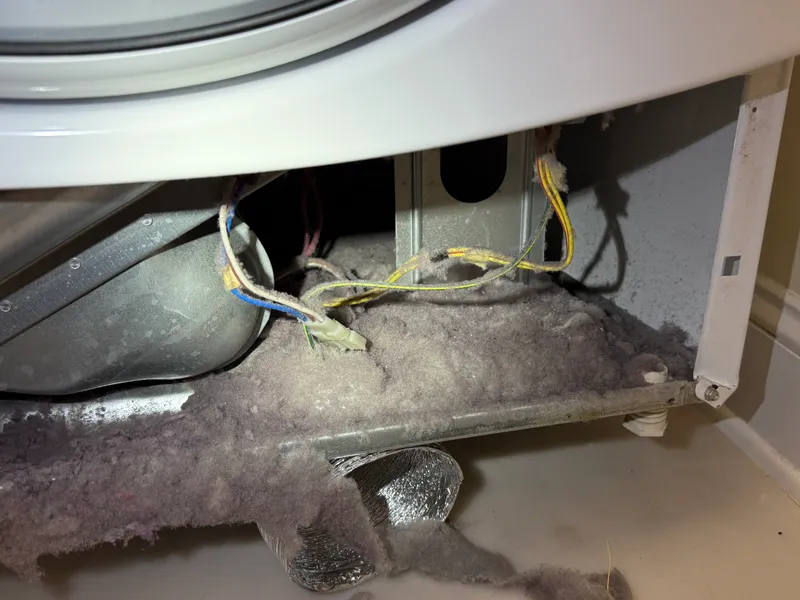
- Lint buildup in the wall, crawlspace, attic, or roof vent run
- Exterior vent flap stuck shut or clogged with lint
- Bird nest, pest guard, or damaged vent cap at the termination
- Vent run too long or too many elbows for the duct type
Start with the lint screen. Clean it before every load. Pour a little water on the screen: if it pools on top instead of draining through, wash the screen with warm water and dish soap, then let it dry completely.
Then pull the dryer out enough to see the transition hose. Whirlpool specifically calls out crushed and kinked vent runs behind the machine. A smashed flex hose can trigger AF even when the rest of the duct looks fine. We fix a lot of those during dryer vent cleaning visits. Our transition hose comparison walks through why crushed semi-rigid and foil hoses cause this.
Whirlpool’s Quick Airflow Check
Whirlpool suggests a simple test you can do yourself. Run the dryer on a heated cycle for 5 to 10 minutes, then hold your hand under the exterior exhaust hood. You should feel air movement about as strong as a hair dryer on high speed.
If airflow feels weak, the vent system needs cleaning from the dryer all the way to the outside termination. Whirlpool recommends having the full home venting run cleaned every one to two years, or sooner when dry times start slipping.
When to Stop Using the Dryer
AF and Check Vent are maintenance warnings, but they point at a real restriction. Longer dry times, a hot dryer cabinet, and lint dust in the laundry room are signs the problem is getting worse.
If clothes need two or three cycles, the outside of the dryer feels unusually hot, or you catch a burning smell, stop running it until the vent is checked. Those are the same red flags we cover in our dryer vent warning signs guide.
Do not jump straight to replacing heating parts. Check airflow first. We have been on plenty of Triad jobs where the homeowner thought the dryer was dying, and the real issue was a packed vent line or a dead exterior flap.
The Outside Vent Counts
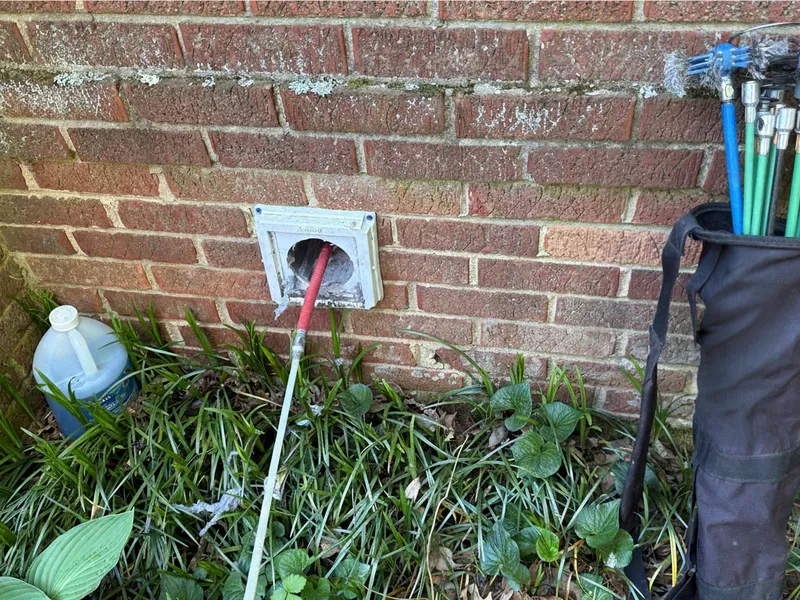
The restriction is not always behind the dryer. A stuck exterior flap, lint caked at the vent cover, or the wrong pest guard can choke airflow just as badly as clogged ductwork.
When Vent Busters cleans a vent, we work the full run and inspect the termination outside. Sometimes cleaning clears the code. Other times the cover is broken, too restrictive, or the wrong style for a dryer. Vent cover repair or replacement may be part of the fix.
When to Schedule Professional Dryer Vent Cleaning
If you cleaned the lint screen, checked behind the dryer, tested airflow at the hood, and AF, F4 E3, F30, or Check Vent still comes back, the blockage is likely deeper in the vent run. That is when professional cleaning makes sense.
Vent Busters serves Greensboro, High Point, Kernersville, Winston-Salem, and nearby Triad communities. We clear the duct, inspect/fix the outside termination, address crushed transition connections, and confirm the dryer has a clear exhaust path.
Whirlpool showing AF or Check Vent?
Fix the Airflow Restriction Before Dry Times Get Worse
Schedule professional dryer vent cleaning with Vent Busters and get your Whirlpool dryer exhausting the way it should.
Schedule NowWhirlpool’s AF, F4 E3, F30, and Check Vent messages all point the same direction. Do the simple checks first. If the warning keeps returning, schedule a dryer vent cleaning and let us take care of it for you!