
“I washed the dog’s blanket and it came out with more hair on it than when it went in.”
There’s a reason for it. Wet fabric grabs hair, and short, wiry dog hair works its way into the weave while the washer runs. Then the dryer blows whatever shakes loose toward the lint screen and the vent behind it.
We clean dryer vents, so the end of that trip is our business. Most of the fix starts well before laundry day, though.
It starts on the floor
Hair lands on floors, couches, and beds long before it lands in the washer. Less hair there means less in the laundry.
Hard floors
A vacuum mostly blows fur around. A microfiber or electrostatic dry mop traps it instead, and a slightly damp mop head works even better.
Couches and chairs
Keep a throw or a washable cover on them. To pull hair off upholstery, dampen a rubber glove and run your hand over the fabric.
Brushing
Double-coated dogs like Labs and Huskies go through two heavy shedding cycles a year, late spring and late fall. Brush them daily during those weeks. Short-haired dogs like Boxers have no undercoat and shed in smaller amounts all year.
The groomer
A professional groomer keeps the coat from getting ahead of you.
Why some laundry comes out worse
Static makes hair cling. Water makes it clump and weave into the fibers, which is how a load comes out of the washer hairier than it went in.
Blankets, dog bedding, towels, and anything that touches the floor or the dog pick up the most. Socks count. Fabric matters too. Wool and velcro-prone fabrics are the worst for static. Denim, 100% cotton, and microfiber hold up better.
Knock it off before the wash
Dry hair comes off easier than wet hair. So get it off first.
Start with the dog bed. Vacuum it thoroughly, or take it outside and shake it like a rug, before the cover comes off. Do the same with blankets. For clothes, a lint roller or a damp rubber glove works.
One step beats them all: run it through the dryer before you wash it. Put the hairy items in for about 10 minutes on no heat with a couple of wool dryer balls and a damp microfiber cloth. Loose hair ends up in the lint trap or on the cloth instead of in your washer.
Clean the lint trap before the wet load goes back in. Otherwise that hair is right back in the airflow.
Some newer dryers have a pet setting built on the same idea: a long tumble with no heat that lifts hair into a bigger lint trap. The air-only cycle on the dryer you already have works the same way.
What to look for in soap
We don’t sell soap. When you’re picking one for pet laundry, look for:
No fragrance, no dye
Pets spend a lot of time with their face pressed into their bedding. A scent that seems fresh to us can be too much for them.
Enzymes
Body oil and protein-based messes break down best with an enzyme detergent.
Pet items in their own load
Hair and soil stay off your clothes.
The right dose
Too little leaves soil behind. Too much leaves residue.
An extra rinse
Especially for a pet with sensitive skin. Ask your vet if you’re not sure.
Skip dryer sheets on pet bedding. Their residue mixes with hair and lint into a stickier buildup.
The lint screen after a dog-bed load
One load of dog bedding can fill the lint trap more than once. Check the screen partway through a bedding load, and clean it again as soon as the load is done.
The screen also collects a film you can’t always see. Fabric softener, detergent, and dryer sheets build up on the mesh. Check for it about every 6 months. To clean it, scrub both sides with a nylon brush, hot water, and liquid detergent. Rinse it well. Let it dry all the way before it goes back in.
Twice a year, pull the screen and vacuum the slot it sits in with a crevice tool.
Past the screen
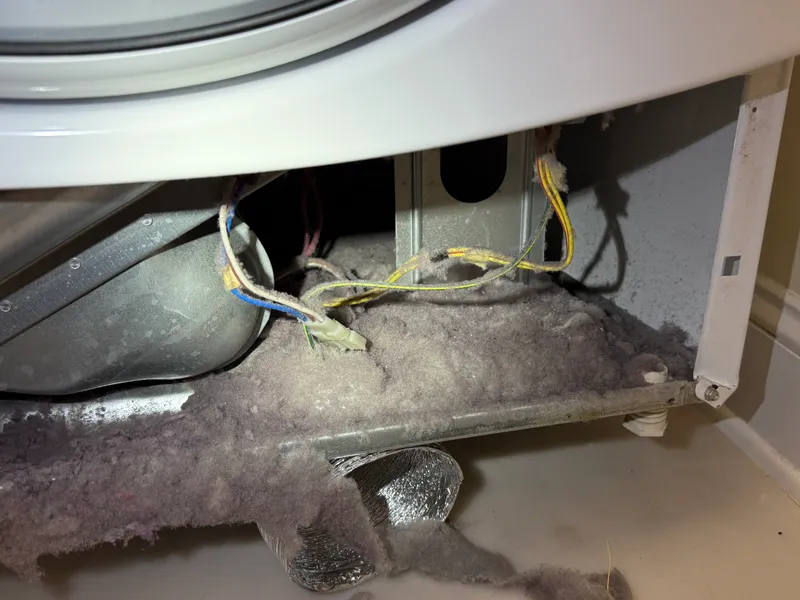
A lint screen doesn’t catch everything. Some lint gets through and restricts airflow over time.
Pet hair makes it worse. The strands are longer and more flexible than lint, so they tangle into dense mats that stick to the vent walls and narrow the passage. Hair travels the whole way, from the drum, past the trap, through the duct, and out to the outside opening.
A roof vent cover can end up completely packed with hair from one large dog.
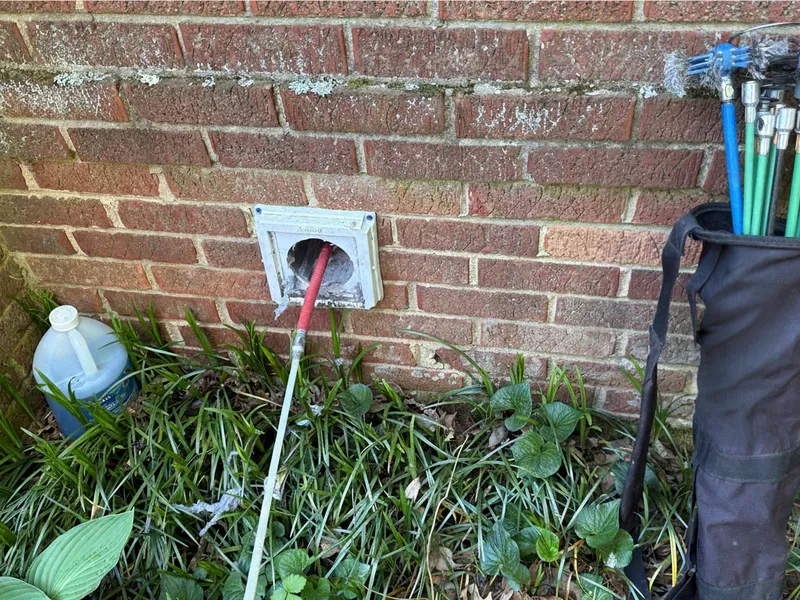
Check yours once a month. That’s the same outdoor glance as the monthly laundry room reset. With the dryer running, go outside and hold your hand at the vent. You should feel a strong push of warm air. You can also take the exterior cover off and vacuum the vent from the outside.
Other signs of a blockage:
- Loads take longer to dry.
- Clothes, or the outside of the dryer, come out hotter than normal.
- You smell something burning while it runs. Stop using the dryer if you do.
- There’s lint around the vent opening outside.
- The laundry room feels humid.
- Birds or pests hang around the exhaust.
When you want help
If the vacuum at the cover doesn’t get the air moving again, it’s time for professional dryer vent cleaning. That’s us. We clean and repair dryer vents in Greensboro, across the Triad, and in Danville, VA. Schedule Online when it’s convenient for you.
A dirty vent is how most dryer fires start, and pet hair blocks one faster than lint from clothes alone.
Call 336-899-8001.